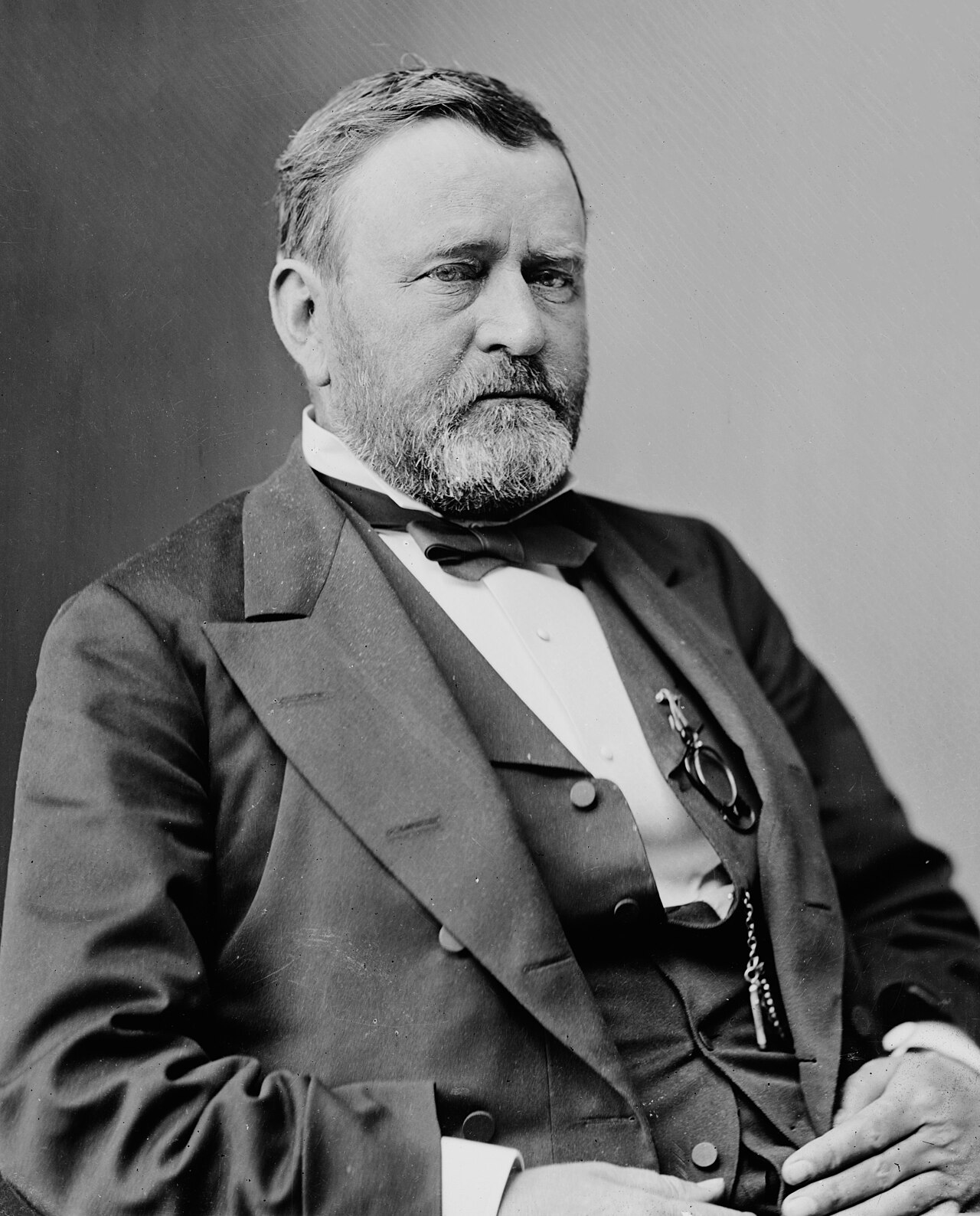
The Unlikely Path of Young Ulysses S. Grant: From Tannery Detest to Destiny's Call
Before becoming the celebrated General and 18th President of the United States, Ulysses S. Grant was simply Hiram Ulysses Grant, a boy growing up in Georgetown, Ohio. The trajectory of his early life was far from straightforward, marked by a profound aversion to his family's trade and a father's ambitious push that would ultimately steer him toward an unforeseen destiny. Understanding Ulysses S Grant Young provides crucial insight into the man who would later lead the Union to victory and guide a nation through Reconstruction.
Born into a modest but enterprising family, young Grant's formative years were heavily influenced by his father, Jesse Root Grant, a shrewd and industrious tanner. While Jesse envisioned his son following in his footsteps, Ulysses harbored a deep-seated dislike for the tannery business—a sentiment that would define much of his early character and choices. This initial conflict between expectation and personal inclination set the stage for a life full of unexpected turns, demonstrating how an individual's earliest experiences, even those begrudgingly embraced, can forge the leader of tomorrow.
Aversion to the Tannery: More Than Just a Dirty Job
For many, the idea of a family business evokes continuity and a sense of belonging. For young Ulysses S. Grant, however, his father's tannery represented quite the opposite. The process of tanning animal hides was messy, odorous, and often grisly, involving blood, chemicals, and strenuous manual labor. The pungent, acrid smells of raw hides and tanning solutions permeated the very air of Georgetown, and for a sensitive boy, this was a constant assault on his senses.
Grant's detestation wasn't merely a youthful whim; it was a visceral reaction to the nature of the work itself. While his father thrived on the commerce and the transformation of raw materials into valuable leather, Ulysses found no such satisfaction. Instead, he preferred the outdoors, the quiet labor of the farm, and particularly, the companionship and challenge of working with horses. It was in these tasks, away from the grim reality of the tannery, that Ulysses S Grant Young truly excelled. He developed an almost uncanny aptitude for handling horses, a skill that would prove invaluable throughout his military career. This deep connection with animals wasn't just a hobby; it was a profound talent, a practical and intuitive understanding that showcased a different kind of intelligence and leadership potential.
His preference for the farm and horses over the tannery wasn't just about comfort; it was about finding an environment where his natural abilities could flourish. This early discernment of his strengths and weaknesses, even if not fully articulated by a boy, highlights the importance of recognizing and nurturing innate talents. Had Grant been forced into the tannery, the world might never have known the strategic brilliance of the General who mastered logistics and cavalry maneuvers. His early experiences underline a powerful truth: sometimes, avoiding what you detest can lead you directly to what you are meant to do. To delve deeper into this aspect of his youth, consider reading about Young Ulysses S. Grant: From Ohio Farm to Horse Master.
Jesse Root Grant's Vision: Father's Push and Son's Reluctance
Jesse Root Grant was a man of ambition, not just for himself but for his children. He saw opportunity where others saw only hardship, and he held high expectations for young Ulysses. Recognizing his son's intellectual capabilities, despite his disinterest in the tannery, Jesse sought a different path for him—one that combined education with a respectable profession. In 1839, Jesse seized an opportunity that would irrevocably alter his son's future: he secured an appointment for Ulysses to the United States Military Academy at West Point, New York.
The decision, however, was not met with enthusiasm by Ulysses. The idea of a military career held little appeal for him. He had no particular interest in soldiering, nor did he possess the typical romanticized view of military life that might have drawn other young men. Yet, Jesse Root Grant was not a man to take no for an answer. He applied considerable pressure on his son to accept the appointment, understanding the immense opportunity it represented – a free, prestigious education and a guaranteed career path, far removed from the tannery he so loathed. For the ambitious father, this was a pathway to success and social mobility for his son.
Reluctantly, Ulysses S Grant Young agreed. He recognized the practical benefits, realizing that West Point offered a chance at an education he might not otherwise receive. This moment of reluctant acceptance, driven by a father's firm hand and a son's pragmatic understanding of opportunity, is a pivotal turning point. It demonstrates that sometimes, the greatest paths are walked not out of immediate passion, but out of necessity, opportunity, or the strong guidance of a loved one. Grant's acceptance, born more of obligation than desire, is a testament to the complex dynamics between parental influence and a child's emergent independence. For more on this critical juncture, explore Ulysses S. Grant's Reluctant Path to West Point.
The West Point Catalyst: A New Identity and Purpose
Upon arriving at West Point, another significant, if accidental, change occurred. Due to a clerical error, he was registered as "Ulysses S. Grant" instead of his birth name, Hiram Ulysses Grant. He embraced this new identity, and the "S", though initially meaningless, soon became associated with his mother's maiden name, Simpson. West Point, while not a place he initially desired, nevertheless provided the rigorous education, discipline, and training that would shape his character and refine his already exceptional horsemanship. It was here that the groundwork was laid for the strategic mind and resilient spirit that would define his later military and political career.
Echoes of Youth: Grant's Character and Legacy
The early life of Ulysses S Grant Young, particularly his disdain for the tannery and his father's forceful guidance, profoundly influenced the man he became. His practicality, resilience, and quiet determination—qualities often observed in individuals who have navigated unwelcome paths—were honed in these formative years. These traits would serve him well through various challenges, from the Mexican-American War to the tumultuous years of the Civil War and his two terms as president.
Modern interpretations of Grant, such as the acclaimed one-act show "Unconditional Surrender: A visit with Ulysses S. Grant" by Pete Grady, shed light on the enduring aspects of his character. Grady's portrayal emphasizes Grant's consequential life, despite dying relatively young at 63. Perhaps the most compelling aspect of Grant's mature life, as highlighted by these insights, was his unwavering devotion to his wife and family. Even towards the end of his life, facing financial hardship, Grant worked tirelessly on his memoirs, hoping to secure his family's financial future after his inevitable death. This deep-seated commitment to his loved ones can be seen as a reflection of the pragmatic and responsible nature developed early on, perhaps even as a counterpoint to the ambitions his father had for him.
The struggles and decisions of his youth—his aversion to his father's business, his exceptional skill with horses, and his reluctant acceptance of a military path—all contributed to forging the resilient, adaptable, and ultimately extraordinary leader. Grant’s life story offers a powerful lesson: sometimes, the most significant personal achievements and societal impacts stem from choices made under pressure, from opportunities seized rather than sought, and from the quiet development of skills in unexpected corners of one's life. His journey underscores that true character is often forged not in ideal circumstances, but in the crucible of early challenges and reluctant acceptance.
In conclusion, the story of Ulysses S Grant Young is a compelling narrative of conflicting desires, parental influence, and the serendipitous turns of fate. His early detest for the tannery, coupled with his father's resolute push towards West Point, laid the foundation for a life of unparalleled significance. It was a path he didn't initially choose, but one that ultimately harnessed his latent talents, shaped his enduring character, and prepared him for the monumental tasks that awaited him on the national stage. Grant's early life reminds us that destiny often unfolds in the most unexpected ways, guided by an intricate dance between personal inclination and the forces that shape our youth.